
If you haven’t heard, non-surgical spinal decompression therapy is the latest and most sought-after form of non-invasive spinal rehabilitation in the US, Canada, and Europe.
And these days, you don’t have to empty your wallet at the chiropractor’s clinic; you can do it yourself at home.

We’ve discovered some incredible home spine decompression devices that might be the secret weapon your aching back has been crying out for.
With the right back stretching device, you’ll be on your way to a pain-free life, investing only 5-15 minutes of your time daily.
The key is choosing the right type of decompression device for your condition.
Some work best for disc problems, others for sciatica, chronic pain, or muscle stiffness – and the wrong choice can waste both time and mone
In a hurry?
See our top picks in a comparison table first, and keep reading to see our full spinal decompression devices reviews:
Quick Picks by Condition
- Disc herniation / bulging discs – Exerpeutic Bench
- Sciatica / pinched nerves – Sit and Decompress
- Chronic back pain – Teeter Inversion Table
- Mid-back stiffness – Orthopedic Back Stretcher
- Inversion alternative – Stamina Traction Control
- Muscle tightness – Chirp Back Wheel
- Posture & daily support – Inflatable Decompression Belt
This post may contain affiliate links at no extra cost to you.
Overview
- How Does a Back Traction Device Work?
- What Is the Best Type of Spine Decompression?
- 1. Horizontal Lumbar Traction Devices – Best for Low Back Pain
- 2. Spinal Decompression Harness – Best for Sciatica & Pinched Nerves
- 3. Inversion Tables – Best for Chronic Back Pain
- 4. Orthopedic Back Stretchers – Best for Mid Back
- 5. Stamina Traction Control – Inversion Table Alternative
- 6. Back Roller Wheel – Best for Muscle Stiffness
- 7. Back Decompression Belt – Best for Posture Correction
- What is the Success Rate of Spinal Decompression?
- How Long Should You Do Spinal Decompression?
- Can Back Traction Hurt Your Back?
- How Often Should I Use a Back Traction Device?
- Are Back Decompression Devices Safe to Use?
How Does a Back Traction Device Work?
A back traction device gently stretches your spine, instantly easing pressure on the discs – those gel-like cushions between your vertebrae – for quick pain relief.
Over time, this decompression may help herniated or bulging discs retract, taking pressure off nerves and boosting healing.
It also improves circulation, delivering nutrients and flushing out inflammation-causing chemicals for long-term relief.
Who Can Benefit from a Back Stretching Device?
Though back decompression home devices are not widely supported in scientific studies, they’ve been used as a drug-free and relatively fast method to relieve back and neck pain for decades.
In 2026, you can do spinal decompression at home – safely and effectively – for a one-time investment and whenever you need it – to quickly relieve muscle back pain, Sciatica, bulging disc pain, back muscle spasms, spinal stenosis, pinched nerves, and degenerative disc disease.
See the success rate of spinal decompression (according to studies).
What Is the Best Type of Spine Decompression?
With so many spinal decompression devices out there, choosing the right one can feel overwhelming. Start by picking the type:
some stretch you lying on your back, others invert you upside down, while some work seated or face down.
For severe pain, go with a powerful option like an inversion table.
1. Horizontal Lumbar Traction Devices – Best for Low Back Pain
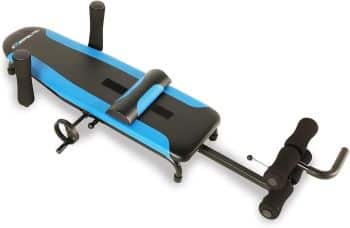
- Treatment time – 5 minutes a day
- Traction type -horizontal back-stretching bench/non-inversion lumbar traction
- Best for – spinal disc compression, sciatica, degenerative discs, chronic low-back tension
✅ $249 on Amazon
For people who don’t like the idea of hanging upside down or doing active stretching with a roller wheel, a horizontal lumbar traction table is the closest thing they’ll find to the traction setup used in a chiropractor’s office.
Just like an inversion table, a back-stretching traction bench is designed to gently stretch the spine, create more space between the vertebrae, and reduce pressure on the spinal discs and surrounding nerves.
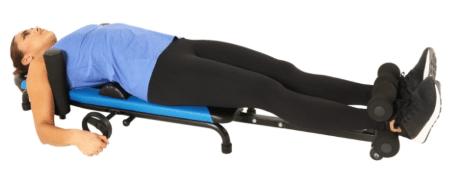
When you lie on the Exerpeutic table, your ankles and legs are supported on adjustable holders, your arms rest on soft arm pads, and your body lies comfortably on a padded surface.
The traction is controlled through a precision hand-wheel, which increases the stretch in very small, controlled increments – ideal for people who need gentle, gradual decompression.
As the bench slowly elongates your spine, pressure is relieved from compressed discs and irritated nerves.
Top Recommendation – Exerpeutic Back Stretch Bench
VIEW ON AMAZON $169
👉 Best for – people with disc compression who want powerful, controlled decompression without inversion.
The Exerpeutic traction bench is easy to use at home, supports up to 350 lbs (300 lb recommended), and uses a precision traction wheel that allows extremely controlled stretching – much more fine-tuned than lever-based systems.
It includes a removable lumbar support pillow for added comfort, four arm-width settings to fit different body sizes, and a padded full-length bench for stable, comfortable decompression.
Unlike many stretch benches, the Exerpeutic is specifically designed to be low-profile for storage, only about 7 inches high when put away, and it can slide under most beds.
A Lower-Cost Alternative
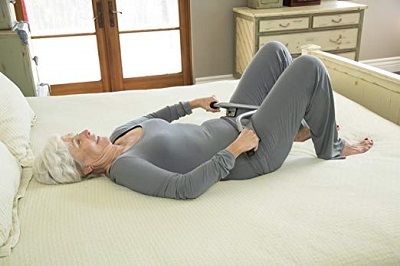
Have you heard about the Lo Bak Trax? Check out this low-cost, non-powered orthopedic spine stretcher.
VIEW ON AMAZON $60
If you want maximum control and comfort, go with the Exerpeutic.
If you want the cheapest non-powered option, Lo Bak Trax is worth trying.
2. Spinal Decompression Harness – Best for Sciatica & Pinched Nerves
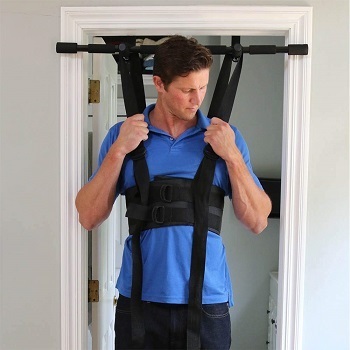
- Treatment time – 3 minutes and 1 more minute every week
- Traction type – stand-up spine stretcher
- Best for – busy people with lower back pain
✅ $35 on Amazon ($74 with a bar)
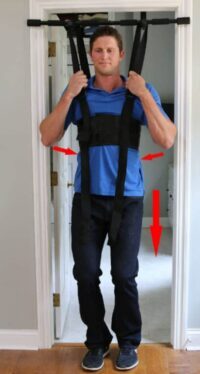
A spinal decompression harness is one of the easiest and most portable low-back pain relief tools you can find.
While it does require a door, you can take it with you anywhere you go (including your office) – and it won’t take up space in your home or while traveling.
The harness takes advantage of the strong pull of gravity along with your body weight to hold your upper body in place while decompressing your mid and lower back (lumbar spine) – in only 3 minutes daily.
It’s easy to assemble, and when we tried it, we felt huge pain relief right after, and the leg pain from Sciatica disappeared until a week later.
It’s not a cure-all, but being able to sleep without pain from a pinched nerve is nothing to dismiss.
Top Recommendation – Sit and Decompress
VIEW ON AMAZON $35
👉 Best for – busy people with sciatica who want fast relief without bulky equipment.
Sit and Decompress is the top-selling spinal decompression harness on the market and claims to increase the space between your spinal discs by 20% instantly (while using).
The more space, the more healing can occur.
This device is very easy to assemble (it takes 5 minutes) and use, and according to consumer reviews, it can take a single treatment to get immediate pain relief.
If it doesn’t work for you, the company allows for a 60-day money-back guarantee.
The harness comes in 4 sizes. Make sure you measure your chest before you pick a size – there’s a good chart on the product page on Amazon.
3. Inversion Tables – Best for Chronic Back Pain
- Treatment time – 5-20 minutes, up to twice a day
- Traction type – inversion
- Best for – low, mid, and upper back pain
✅ $429 on Amazon
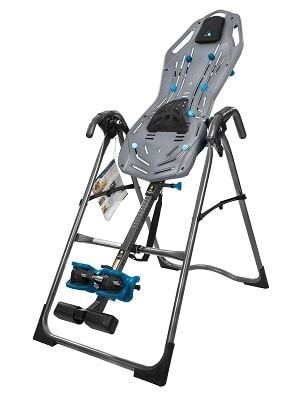
Inversion tables can be a game-changer for chronic back pain sufferers.
When you do spinal decompression by hanging upside down, the weight of your upper body plus gravity is used to extend your spine.
When you do that, the space between your vertebrae increases, bulging/herniated discs can heal, and the pain relief you feel is almost immediate.
You strap yourself in and start gradually inverting at a low angle (As low as 30 degrees).
Gradually, you can increase the inverting angle, but many people don’t find it necessary. Even a low angle works.
The result is reduced back pain, improved circulation, increased mobility, muscle tension relief, and posture correction.
We highly recommend not compromising on the quality and safety of the table because a cheap, low-quality one can cause serious injuries.
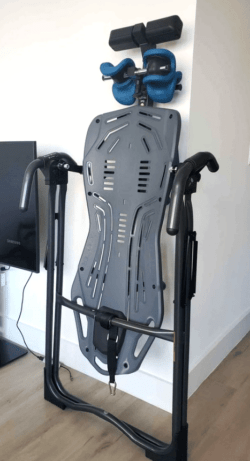
Top Recommendation – Teeter Inversion Tables
👉 Best for – chronic back pain sufferers who need the strongest decompression available at home.
Since inversion tables are not cheap, you’ll want to make sure you are getting your money’s worth.
This means you need a high-quality and durable inversion table that is easy to assemble, with comfortable and safe ankle locks, supports your height and weight, and folds for storage so it won’t take up much space.
Based on our research and experience, the Teeter Inversion tables are the most effective and comfortable on the market.
See why in our Teeter Inversion Tables Reviews.
We’ve also researched and found the best cheap inversion tables.
For a lower budget, we recommend all Innova Inversion Tables.
4. Orthopedic Back Stretchers – Best for Mid Back
- Treatment time – 5-30 minutes up to twice daily
- Traction type – arched back stretcher
- Best for – workout recovery, mid-back pain
✅ $24 on Amazon
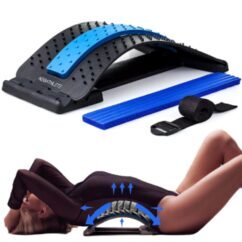
For more gentle back traction, we recommend orthopedic back stretchers.
These simple devices, which require no assembly, are used effortlessly while lying down.
They are anatomically shaped to conform to your spine and realign your vertebrae to help improve your posture and relieve compression in your nerves and discs.
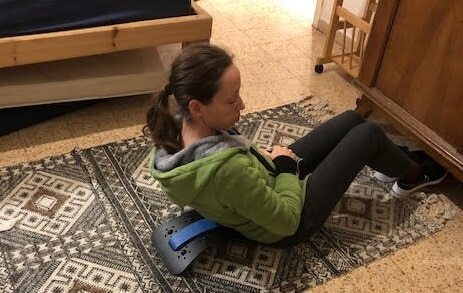
When compression is reduced, healing nutrients and pain-relieving components can flow much better to the area and speed up healing and rehabilitation.
However, you should know that if you have existing pain, using this device will not feel very comfortable.
It looks harmless and small. But even the lowest degree stretches your spine enough to make it feel more painful.
But, if you manage to stay 3-5 minutes on it, you’ll be amazed by the relief it can give you.
Top Recommendation – Cozy Life Back Stretcher
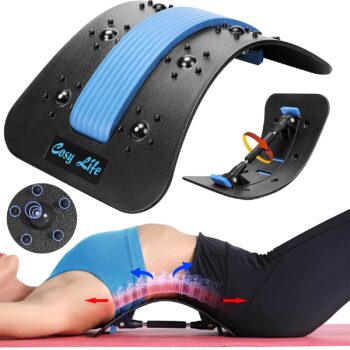
👉 Best for – mid-back stiffness and posture issues, not acute disc pain.
We chose the Cozy Life because it was the only arched back stretcher that allows you to set it to any height, instead of just giving you 3 heights to choose from, like most brands.
The acupressure points around the spine area are a great bonus, and they also increase blood circulation.
The padding is high-quality and comfortable.
See the best spine decompression exercises
5. Stamina Traction Control – Inversion Table Alternative
- Treatment time – 5 minutes up to twice daily
- Traction type – standing back stretcher
- Best for – full back stretch (no neck stretch)
✅ $176 on Amazon
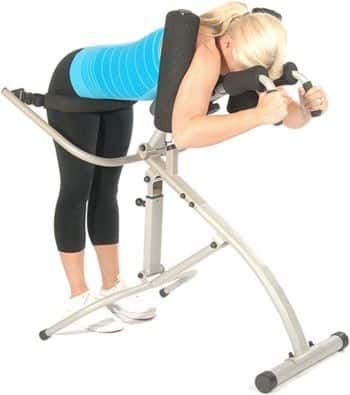
Suppose you are stressed out about hanging upside down (like some people). In that case, the Stamina Inline Traction Control System can stretch your spine just as powerfully as a gravity table without inverting.
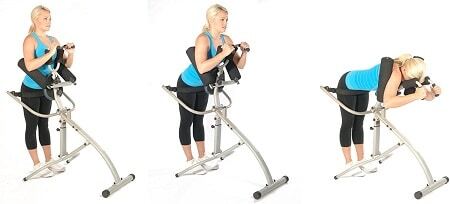
The system has an adjustable padded lap belt that needs to be positioned in line with your hips.
You then adjust the width of the padded arm supports to fit your body.
Padded cushions also support the chest and head.
Once adjusted, you lean forward into the system, which applies traction and stretches your back, hips, and legs.
This helps decompress the spine and improve posture and body alignment.
VIEW ON AMAZON $176
👉 Best for – people who want strong traction but don’t feel safe hanging upside down.
The steel frame construction can support up to 250 lbs and is designed to be stable whether you are upright or leaning forward!
6. Back Roller Wheel – Best for Muscle Stiffness
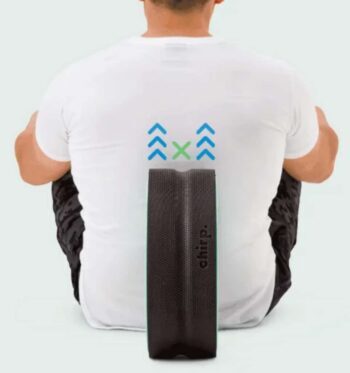
- Treatment time – 5 minutes
- Traction type – yoga stretch
- Best for – muscle stiffness along the spine, pinched nerves, reduced flexibility
✅ $84 at Chirp (3-pack)
A back roller wheel is a super-smart, portable back decompression device that allows you to fully control the strength of your stretch while giving yourself a great, deep-tissue back muscle massage.
It’s like a foam roller on steroids – it will never crumble down under your weight, and it won’t put pressure on your spine because it follows the natural curve of the spine to fit perfectly between the shoulder blades and is padded.
When you roll your back over it, it stretches your back muscles, massages them, and at the same time, provides spine traction.
This takes the pressure off the discs and boosts blood circulation for faster healing.
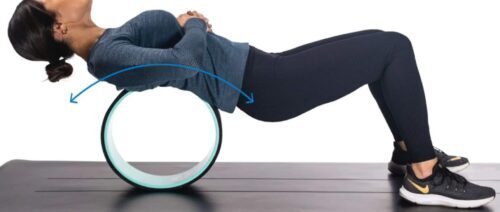
If your back muscles are tight, stiff, and sore, or you suffer from muscle knots, a back wheel will make you feel like you just had a professional massage (we felt like a weight was immediately lifted off our back, and we got a good back crack from it too).
With time, you will increase your flexibility and mobility, and you may even be able to touch your toes again.
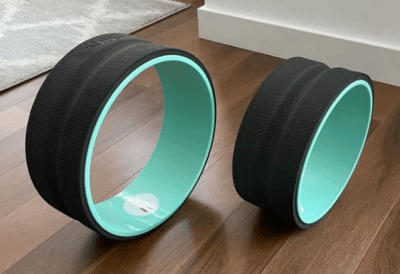
Top Recommendation – The Chirp Wheel
$84 AT CHIRP (3-pack)
👉 Best for – muscle tightness and stiffness along the spine rather than disc injuries.
When you pick a back roller wheel, you need to make sure it’s comfortable, sturdy, well-made (to support your weight), and doesn’t hurt your back with a too-rigid surface.
Our top pick, the Chirp wheel+, comes in 3 sizes to target both small and large areas and applies pressure only where it’s needed while keeping your spine safe.
The weight limit is 300 lbs, and the small size is great for neck pain relief.
7. Back Decompression Belt – Best for Posture Correction
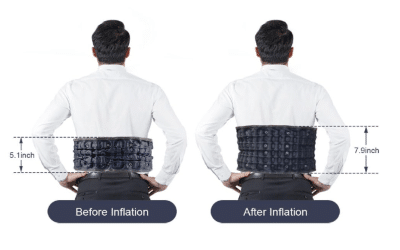
- Treatment time – as much as needed for general support or chronic pain, for severe conditions, 3-4 times daily for 30 minutes.
- Traction type – inflatable lumbar-traction belt with heating (battery powered)
- Best for – posture problems, lumbar disc compression (L4/L5), sciatica, muscle stiffness
✅ $63 on Amazon (with code under the price)
Can a simple back belt with an inflatable component and heating actually decompress your spine?
Yes – surprisingly, it can.
When inflated, this belt gently expands vertically, lifting part of your upper body weight off the lower spine.
This helps to decompress compressed lumbar discs, relieve nerve pressure, and reduce pain and stiffness.
On top of that, the built-in heating pad (powered by a 4000 mAh rechargeable battery) adds warmth that can relax tight muscles, improve blood flow, and soothe soreness.
That combination – traction + heat – can make movement easier and more comfortable, even while walking, sitting, driving, or working.
When deflated (and with heating turned off), the belt doubles as a regular lumbar support/posture corrector.
It’s wearable under clothes and portable, making it useful for daily use beyond therapy sessions.
With regular use, many people notice improved posture, reduced slouching, and less lumbar pain – especially those suffering from disc compression, sciatica, or chronic lower-back tension.
Top Recommendation – Goldmille Inflatable Lumbar Decompression Belt
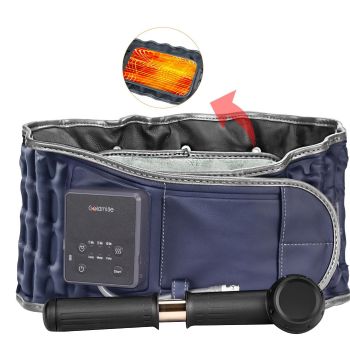
VIEW ON AMAZON $63
👉 Best for – posture correction and gentle daily lumbar decompression while moving.
We recommend this belt because:
- It offers actual inflatable decompression (not just compression or support), similar to medical traction belts.
- The heated lumbar pad and rechargeable battery provide soothing warmth and muscle relaxation – a useful addition if your back pain involves muscle tightness or stiffness.
- It’s portable and wearable under clothes, so you can use it during everyday activities, not just lying or resting.
However, to get the most out of it, you’ll need to read the instructions carefully and use it correctly.
Don’t overdo it to prevent more harm than good.
What is the Success Rate of Spinal Decompression?
Most research (though limited) has shown spinal decompression to be successful in 71% to 89% of people.
More than 10 studies have shown a significant decrease in pain and disability and an increase in activity and quality of life.
Some studies report reduced disc herniation and increased disc height, proven in MRIs.
Results tend to be strongest when spinal decompression is done consistently and with the right type of device.
For example, inversion tables such as the Teeter FitSpine models are often used for longer treatment sessions and chronic conditions, while targeted devices like the Exerpeutic traction bench or Sit and Decompress harness are better suited for focused lower-back or nerve-related pain.
Choosing a device that matches the severity and location of your pain plays a major role in whether decompression is successful.
How Long Should You Do Spinal Decompression?
The treatment period of spinal decompression at home depends on the type of device and its decompression power, with the severity of your condition.
Chronic back pain sufferers may need a few months of regular back traction treatments, while people who suffer from acute muscle or disc injuries may feel relief and recover in just a month or so.
Most studies with positive results (pain relief/reduced disability) had patients use spine decompression 3 times a week for at least four weeks.
Devices designed for short, daily sessions – like the Posture Pump Dual Deluxe – are often easier to stay consistent with.
More powerful systems, such as inversion tables or traction benches (like the Teeter or Exerpeutic), typically require fewer sessions per week but longer individual treatments.
Can Back Traction Hurt Your Back?
Though back traction is simply a gentle stretch of the spine, it can go wrong and cause more damage if you don’t know how to do it, which device to use, or if your condition falls into the contraindicated list.
1. Consult with your physician before attempting any type of back traction at home.
2. Back traction should be stopped immediately if you feel extra pain and discomfort.
3. Back traction at home should not be performed if you have the following conditions: Unstable spine, tumor, fracture, abdominal aortic aneurysm, advanced osteoarthritis, severe spondylolisthesis, fresh disc surgery, or metal implants on the spine.
4. While using a back stretcher machine, it is important to align the spine first. Do not twist the spine while doing traction.
This is why choosing the right type of device matters.
If you’re new to spinal decompression or have balance concerns, non-inversion options like the Exerpeutic traction bench, Stamina Inline Traction Control, or a decompression belt allow controlled stretching without hanging upside down.
Inversion tables, such as the Teeter, should only be used if you meet the safety requirements and follow the manufacturer’s setup and angle guidelines carefully.
How Often Should I Use a Back Traction Device?
According to studies, it is recommended that back traction devices be used for a few minutes to 20 to 30 minutes, once or twice weekly to several times per day.
Overuse or prolonged use of a back traction device can cause discomfort or further injury.
Also, it’s important to allow adequate rest and recovery time between traction sessions to allow the back muscles and joints to recover.
Are Back Decompression Devices Safe to Use?
When used properly, home back traction devices can be safe and effective for relieving back pain.
However, as with any medical device, there are potential risks and safety considerations that you should take into account.
For example, inversion tables are not safe for people with certain conditions.
It’s important to follow the instructions provided with the device carefully and not exceed the recommended usage times or weight limits.
Using a back traction device too aggressively or for too long may cause discomfort or further injury.
For people who want a safer, lower-risk starting point, devices like orthopedic back stretchers or back roller wheels offer mild decompression and muscle release without high traction forces.
Stronger systems – such as inversion tables and traction benches – can be very effective, but they require careful setup, proper alignment, and checking weight and time limits.
Spinal decompression devices make some of the best gift ideas for people with back/neck pain
Still not sure which one to choose?
- Powerful decompression: Teeter Inversion Table
- Disc injuries: Exerpeutic Bench
- Sciatica relief: Sit and Decompress
- Muscle stiffness: Chirp Back Wheel
- Daily posture support: cInflatable Belt
To your health and happiness,
The Back Pain Relief Products Team
Studies
Apfel et al., Restoration of disk height through non-surgical spinal decompression is associated with
decreased discogenic low back pain: a retrospective cohort study. BMC Musculoskeletal Disorders 2010,
11:155
Choi, Jioun et al. “Influences of spinal decompression therapy and general traction therapy on the pain, disability, and straight leg raising of patients with intervertebral disc herniation.” Journal of physical therapy science vol. 27,2 (2015): 481-3.
Swezey RL, Swezey AM, Warner K. Efficacy of home cervical traction therapy. Am J Phys Med Rehabil. 1999 Jan-Feb;78(1):30-2.
I just got a Orthopedic Back Stretcher and while it is difficult to relax on it when I first lie down once I do I get a few big pops from 2 different places of my spine which come with a split second pain and then instant relief follows for the rest of the 6 mins I use it, I was wondering if this is normal and also is 6 mins long enough or should I be doing it more?
Thanks
Spine “pops” like those are one of the best benefits of these orthopedic stretchers, and if you feel the relief it’s good. You can work your way up to 20 minutes a day gradually and you’ll soon start to feel prolonged relief and improvement. At least this is my experience.
Thank you for your reply, I think I will slowly up the time I spend on it by a bit every couple of days from now on I feel there is another ¨pop¨ that wants to happen but just has not yet which may require me to spend a little more time on it, one more question if you do not mind, when I am getting up off of it I have some difficulty getting to my feet at first and need to sit in a chair for at least ten minutes before I feel like I am walking normally again is this just normal muscle streching issues?
I’ve been looking at the Nubax Trio and the Stamina Inline Traction Control machine. Do you know if one is better than the other, or does one provide more traction? There is a significant difference in price between the two, but of course, that doesn’t necessarily mean the more expensive one is better.
To my knowledge they both provide the same power of traction, I would go for the Stamina Inline because it is usually lower-priced, and the traction is done lying down (which requires less effort)
Back pain is the most common pain these days as common as a headache. Thankfully we have remedies too to address this issue. The tools and their usage methods are wonderfully explained. Thank you for sharing the post.
Can traction device help with back spurs in the third, fourth and fifth vertebrae?
I can’t seem to find any studies that prove that it can help, I would ask my doctor.
Yes and no. The spurs are created when there is laxity in the supporting ligaments. Therefore your traction sessions should be intermittent in nature. On a minute or so and off a minute or so. On and off for about 10 to 15 minutes. If you do constant traction for too long the ligaments will become more relaxed and more bone will be laid down creating more spurs. So perform correctly and choose wisely
Peace and good luck
Is an inversion table safe to use for someone with One total Hip Replacement (anterior procedure)
I would advise you to check with your doctor to be on the safe side.