Being told you have lumbar disc degeneration can sound frightening – but for many people, it doesn’t mean constant or worsening pain.
In fact, many flare-ups come from pressure, inflammation, and muscle guarding – not permanent damage.
Below, I’ll show you the natural, evidence-based ways I’ve seen help calm pain, reduce flares, and support recovery – without drugs or surgery.

This post may contain affiliate links at no extra cost to you.
Overview
A Surprising Fact about Lumbar Disc Degeneration
Doctors say ‘degenerative disc disease,’ but it’s really age-related disc wear-and-tear.
Many people have it on scans – often without severe, ongoing pain
Why?
Just like other parts of our body, our spinal discs deteriorate over time.
By the time we reach “old” age, they are damaged enough to fall under the degenerative disc disease (DDD) category.
But here’s the good news:
There are more than a few natural treatments for disc degeneration.
Just stick with me, and you’ll get all the “inside information” about the remarkable natural options you have – right now.
Who These Natural Treatments Work Best For
Based on clinical evidence and our experience, home treatments work best for:
- Mechanical low back pain from disc dehydration and mild to moderate disc height loss
- Disc bulges without significant neurological deficits
- Pain aggravated by sitting / flexion
- Morning stiffness, inflammation, muscle guarding
Many people with disc degeneration live active, low-pain lives – especially if you manage flare triggers correctly.
Natural Ways to Help a Bulging Disc Heal
Here’s the 3-step recovery plan for DDD:
1. Drug-Free Pain Relief (through back traction, infrared heat, massage)
2. Recovery and Healing (through exercises, spinal decompression, self-massage)
3. Prevention
It doesn’t matter if your lumbar degenerative discs are caused by osteoarthritis, ankylosing spondylitis, or spinal stenosis:
The remarkable benefit of natural treatments is that they are capable of significantly reducing pain without drugs, while supporting recovery, disc health, and long-term spine function.
The following natural treatments will reduce the pressure on your discs, boost blood circulation to the area (bringing healing nutrients and restoring disc fluids), and reduce the pain-causing inflammation – all at the same time.
1. Degenerative Disc Disease Exercises
Exercising the right way is essential to relieving pain and recovering from DDD.
Your exercise program should include Hamstring stretching, dynamic lumbar stabilization exercises, and low-impact aerobic conditioning (walking and swimming are best).
Here’s a video demonstration for some helpful DDD exercises:
2. Lower Back Traction
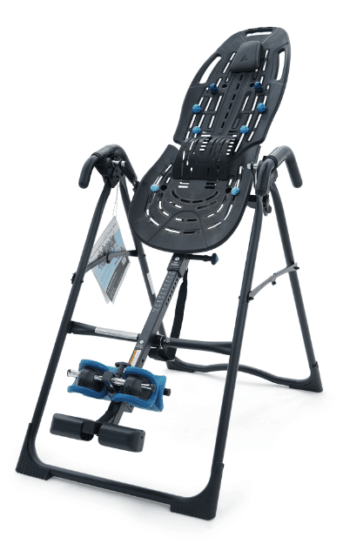
Lower back traction (also known as spinal decompression) can relieve your back pain by increasing the space between the vertebrae.
Lower back traction basically pulls the top half of your body and the bottom half – away from each other.
When you do this, your aching muscles get a chance to relax and you take a bit of the pressure off your discs.
This allows for:
1. Almost immediate pain relief by taking the load off your spinal discs (for some people, it’s not guaranteed).
2. Heat and gentle movement can reduce muscle guarding and improve comfort, so you can move more, which is what best supports recovery.
3. Relaxing your aching muscles in the lower back.
Do not completely turn upside down immediately. Work your way into it – even if it takes a month or more.
Source: WebMD
How to Use
- Start at 20–30° (not more).
- Duration: 3–5 minutes, 1–2×/day.
- Increase only if no dizziness or nerve symptoms
- Target depth for therapeutic decompression: 45–60°.
If you want the safest and most durable option, the Teeter is still our top recommendation.
Who Should Not Use Traction/Inversion Tables
Based on AANS & NASS guidelines, avoid inversion or strong traction if you have:
- Uncontrolled hypertension
- Glaucoma or retinal conditions (increases intraocular pressure)
- Hiatal hernia
- Heart disease
- Spinal fusion
- Severe osteoporosis
- Recent disc herniation – less than 6 weeks – with worsening symptoms
3. Self Massage

Therapeutic low back massage can provide low back pain relief by improving blood flow, reducing muscle stiffness, increasing range of motion, and raising endorphin levels in your body.
Plus, when you suffer from back pain, it can wreak havoc on your sleep, which in turn increases recovery time because your body doesn’t get the rest it needs.
A good massage before bed will take away your pain and your anxiety, and promote a long, deep, and healing sleep (study).
There are many more electric back massagers you can try, including a vibrating massage mattress, a handheld massager, a massage pillow, and more.
Many people with DDD say the right massage tool is a game-changer. See the Best-Selling Shiatsu Back Massager.
4. Infrared Heating Pad

I don’t think I’m exaggerating when I say that an infrared heating pad is one of the most effective drug-free pain relief tools we’ve used.
Forget about the EMF-radiating, skin-burning electric heating pad you have at home.
Infrared therapy is a revolutionary and proven natural pain relief method, which is completely safe and far superior to regular heating pads.
Infrared rays (invisible to the naked eye) penetrate deep into your tissues, all the way to your spine and nerves.
They boost your blood circulation and heal inflammation while you enjoy the pleasant and relaxing heat, which won’t burn your skin and warm you up all the way to your spinal discs.
It’s in my experience that an infrared heating pad is the best way to fall asleep without back pain, and feel dramatic relief for up to 6 hours – without any medication (and science supports this).
Plus, it gets you the blood-boosting benefit I’ve mentioned several times.
How to Use
Evidence-Backed Expert Protocol (Using Hamblin 2017; Hwang et al. 2015; PBM guidelines):
- Treatment time: 15–20 minutes
- Wavelengths: 810–850 nm (deepest penetration – ideal for discs)
- Frequency: 4–6× per week
- Best time: Before exercises or stretching
If falling asleep without back pain is your goal, see the infrared heating pad we use.
5. Lumbar Back Brace
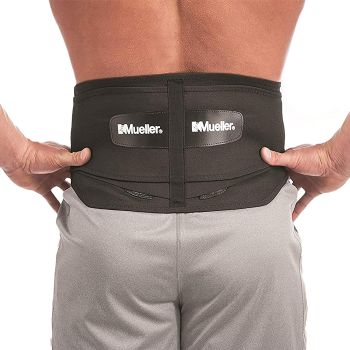
Lower back braces can sometimes help reduce acute low back pain from degenerative disc disease by limiting the motion of the spine.
It provides support and compression to the lower back to reduce pain and discomfort, and improve posture, while preventing further injury.
However:
I would caution against the long-term use of a back brace, as it can lead to a weakening of the muscles.
Short-term bracing or bracing with certain activities, maybe a reasonable option for some people.
6. Herbs for Degenerative Disc Disease
As you know, lumbar disc degeneration causes inflammation (the reason for your pain).
As always, balanced and healthy nutrition will help your body reduce inflammation and can help lower your weight, which will take some load off your spine.
I recommend a real food diet, without processed foods.
Incorporate inflammation-busting foods and herbs in your daily meals, such as:
Ginger, turmeric, garlic, Cayenne pepper, dark leafy greens, pineapple, Papaya, Devil’s claw, Boswelia, and Chamomile.
Try to eliminate, as much as you can, dairy and meat, and avoid processed sugar and flour. Fried foods are not a good idea either.
Supplement Dosages That Have Evidence Behind Them
The strongest evidence supports:
- Omega-3
- Turmeric/curcumin (500–1500 mg/d)
- Boswellia (100–200 mg/d)
Foods to avoid:
- Seed oils
- Excess alcohol
- High-sugar foods
- Processed meats
What Are the 3 Biggest Mistakes That Delay DDD Recovery?
These come directly from people we know:
1. Too much rest – Avoiding movement increases stiffness, inflammation, and depression-related pain.
2. Doing the wrong stretches – Forward-bending hamstring stretches often worsen disc bulges if done too early. Many people hinge incorrectly from the spine instead of the hips. (There’s a simple gadget that can help)
3. Overusing back braces – Using a back brace for more than 30–60 minutes a day can actually weaken your deep stabilizing muscles, including the multifidus.
How Long Recovery Actually Takes
- Initial pain relief: 3–7 days
- Meaningful reduction in stiffness/mobility gains: 3–6 weeks
- Disc recovery (improved hydration, reduced inflammatory mediators): 8–12 weeks (source)
- Long-term functional recovery: 3–6 months
The Ideal Weekly Routine for Disc Degeneration Recovery
Daily
- 10–20 minutes walking
- 5 minutes of pelvic tilts & bird-dog activation
- A small break every 40 minutes if sitting
- 30-minute infrared heating pad relaxing
- 1 Omega 3 capsule, 1 turmeric/curcumin capsule
- 5-10 minutes of inversion therapy
How do I know if my disc is healing?
You’ll know your disc is healing when you feel:
- Decreased morning stiffness
- Pain no longer radiates
- Longer sitting/walking ability
- Improved ability to hinge from hips
- Less nighttime pain
- More good days than bad
What Causes Lumbar DDD?
Your spinal discs absorb shock to the spine.
Just like in your car, they reduce the effect of “traveling over rough ground” to prevent injury or trauma when we do everyday movements like twisting, flexing, and bending.
Imagine your discs go through a lifetime of wear and tear.
Two main things happen over time:
1. Loss of fluids in the discs, which makes them less flexible and thus less effective shock absorbers.
They become thinner, and the space between your vertebrae is reduced.
2. Cracks and tears in the outer layers of the spinal discs – the gel-like material inside the nucleus of the disc leaks out, which leads to bulging discs, ruptured discs, and fragmented discs.
Visualize your spine as a chain where it is just as strong as the weakest link.
Unfortunately, within the spine, the weakest link also often absorbs much of your weight because of the misalignment of the vertebrae.
This puts increased force on the areas of the soft-jelled disc, which causes them to wear down over time.
As a result, the lumbar disc degeneration symptoms are lower back stiffness, tightness, and generally a sharp pain in the lower back.
Can Spinal Disc Disease Heal on Its Own?
Just because DDD includes the word “degenerative” in it, doesn’t mean that your symptoms will get worse.
While it’s true that disc degeneration may progress over time, the pain you are experiencing can be dramatically reduced and even eliminated, especially if you help your body using the natural methods listed here.
You can not really reverse DDD, but you can make lifestyle changes that can protect your spine and keep it from getting a lot worse.
A few other lifestyle changes can have a powerful healing effect on your back pain:
1. If your work requires sitting for long periods of time, consider switching to an ergonomic office chair.
2. Learn how to fix your posture, which is incredibly important for managing lower back pain.
3. Modify your sleep position to avoid pressure on your spine when you sleep. A good body pillow can turn around your sleeping experience forever.
If You’re Not Sure Where to Start:
Start with *one* tool that gives the fastest pain relief for most DDD sufferers:
- UTK Infrared Heating Pad – Best for daily pain relief
- Shiatsu Massager – Best for muscle tension
- Teeter Inversion Table – Best for decompression and long-term relief
Conclusion
Recovering from degenerative disc disease in the lower back requires combining a few natural and remarkably effective treatments.
In this post, you’ve learned about home back traction, DDD exercises, infrared heat, anti-inflammation food and supplements, back braces, and self-massage tools.
It may take some dedication and time, but it won’t cost your life savings, and you won’t depend on lifetime painkillers and possible surgery.
Natural treatments for low back degenerative discs can be fabulously effective; all you need is to get up and give them a try.
What do you think your first step toward recovery would be? Share your thoughts and questions in the comments below.
The Back Pain Relief Products Team
Studies
Hwang, Min Ho, et al. Low Level Light Therapy Modulates Inflammatory Mediators Secreted by Human Annulus Fibrosus Cells during Intervertebral Disc Degeneration In Vitro, DO – 10.1111/php.12415
Hamblin MR. Mechanisms and applications of the anti-inflammatory effects of photobiomodulation. AIMS Biophys. 2017;4(3):337‐361. doi:10.3934/biophy.2017.3.337
Kim S, Kim H, Chung J. Effects of Spinal Stabilization Exercise on the Cross-sectional Areas of the Lumbar Multifidus and Psoas Major Muscles, Pain Intensity, and Lumbar Muscle Strength of Patients with Degenerative Disc Disease. J Phys Ther Sci. 2014;26(4):579‐582. doi:10.1589/jpts.26.579
Khan AN, Jacobsen HE, Khan J, et al. Inflammatory biomarkers of low back pain and disc degeneration: a review. Ann N Y Acad Sci. 2017;1410(1):68‐84. doi:10.1111/nyas.13551