That painful knot between your shoulder blades or in your lower back can make even simple movements uncomfortable.
The good news is that you can often ease muscle knots at home with heat, gentle massage, and self-massage tools.
The trick is choosing the right approach. A heating pad can help when the whole area feels tight, while a massage ball or roller is better suited to working on a specific sore spot.
Here are three ways to relieve back muscle knots, when each works best, and which tools are actually worth trying.
This post may contain affiliate links at no extra cost to you.
Key Takeaways
- For broad muscle tightness: Try gentle heat to ease stiffness and increase local circulation. An electric or infrared heating pad is convenient for a larger area.
- For one stubborn knot: A massage ball or handheld massager lets you focus on the tender spot. Start gently rather than pressing as hard as possible.
- For upper-back tension: A foam roller can help massage larger muscle areas and improve comfortable movement. Avoid rolling directly over your spine.
How Do You Know If You Have a Muscle Knot in Your Back?
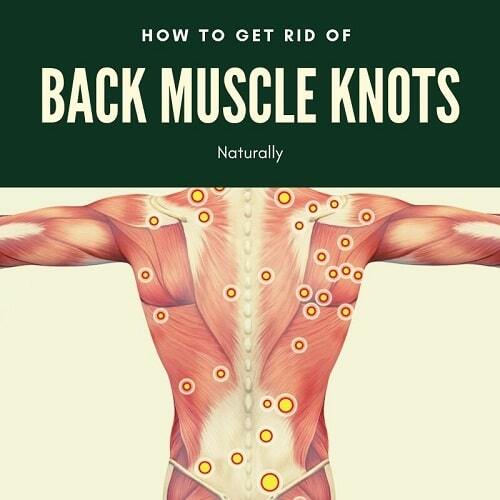
Muscle knots are tender, tight-feeling spots commonly described as myofascial trigger points.
They often appear around the shoulders, between the shoulder blades, or in the lower back.
You might feel a dull ache, stiffness, or a very sore spot when you press on the muscle.
Repetitive movements, too much sitting, muscle overuse, and stress can cause this kind of pain.
Despite the name, a muscle knot isn’t literally a tangled piece of muscle.
Researchers are still investigating exactly what happens in these painful areas and how reliably trigger points can be identified.
If you notice a big lump that is growing, swollen, red, or painful even without touching it, don’t automatically assume it’s a muscle knot.
What Do Knots Look Like in Your Back?
Muscle knots can vary in size and severity.
Some may be small and barely noticeable, while others can be larger and swollen, which can make the area look more pronounced.
Their appearance also depends on their muscle group, muscle tone, and body composition.
Here’s what muscle knots look like in real life (instead of the common animations you find online):
How Long Do Muscle Knots Last?
The duration of muscle knots varies depending on their severity and whether they are treated.
Acute knots may resolve within a few days with proper care (like doing some of the tips in this post), while chronic or severe knots can stay for weeks or months if left untreated.
Effective treatments, such as massage, heat therapy, or stretching, can speed up recovery significantly.
The 3 Quickest Ways to Release Muscle Knots (at Home)
I know the pain from a trigger point can be awful, but please consider letting go of the painkiller and try these natural and quick home treatments to loosen a muscle knot quickly.
Here’s how to get a knot out of your back by yourself:
1. Use Heat to Relax Tight Back Muscles

✅ Best for – deep muscle knots, people who want relief without active effort, chronic back tightness
❌ Not ideal for -people who need very targeted pressure on a specific trigger point
If your back feels tight, stiff, or sore across a larger area, heat is one of the simplest places to start.
Local heating increases blood circulation, which delivers oxygen and nutrients needed for normal muscle function and repair.
In a human study, researchers found a significant increase in blood flow to the underlying muscles during local heating.
Heat may also make the area feel more comfortable before gentle stretching or massage.
What to use: A regular electric heating pad can be enough for many people. But an infrared heating pad emits less EMF, is usually weighted and gives you more tempeature control and timer options.
Why it works
- Infrared heat penetrates deeper than surface heat
- Increased circulation helps tight muscle fibers release
- Heat relaxes fascia, not just surface muscle
If you want the easiest way to calm stubborn back knots without pressing or rolling, see the infrared heating pads that actually work for muscle pain.
Heat works best when you want passive relief. If you need to target a specific knot, the next option gives you more control.
2. Apply Gentle Pressure with a Massage Tool
✅ Best for – upper back knots, shoulder blade pain, people who want precise pressure
❌ Not ideal for – people who dislike applying pressure themselves
If you can point to one specific sore spot in your upper or middle back, targeted self-massage can help more than just warming the whole area.
You don’t need to press hard enough to hurt yourself.
Try placing a tennis or massage ball between your back and a wall. Lean gently into the ball, keeping it on the muscle rather than directly over your spine, and make small, controlled movements.
You can also use a handheld massage tool if the spot is difficult to reach.
What to use: A simple massage ball is the cheapest starting point. A massage cane offers better reach, while an electric handheld massager requires less manual pressure.
Start gently and stop if you feel sharp pain, tingling, numbness, or worsening symptoms. More pressure doesn’t necessarily mean better relief.
If you want a full-area release rather than point pressure, a trigger point roller may be the better option.
How Do You Use Self-Massage Tools to Release Trigger Points?
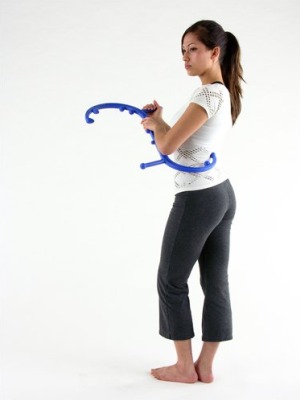
To release back muscle knots, you simply hook the Body Back Buddy or the Theracane over your shoulder or around your side and hold it by the handles so that the knob touches your trigger point.
Then you push away from your body with your lower or outside hand while guiding the knob with the upper or inside hand.
Stick with a comfortable pressure for 10 to 30 seconds and return to the treated area 3 to 4 times each session.
You may be shocked to see how fast you’ll feel better, and after a few sessions, you’ll be able to move better, use your muscles, and even drive pain-free.
3. Use a Foam Roller for Upper-Back Tightness

✅ Best for – recurring knots, full-back tightness, active people
❌ Not ideal for – people who cannot comfortably get down on the floor
Unlike regular foam rollers, trigger point foam rollers are compact, heavy-duty foam rollers with different patterns on the surface for a variety of manipulations and applications.
A foam roller is worth considering if the muscles across your upper back feel tight rather than having one isolated sore point.
It lets you apply controlled pressure to a wider area and can help improve comfortable movement.
When rolling your upper back, move slowly over the muscle and avoid forcing your body into painful positions.
What to use: A softer foam roller is easier for beginners to tolerate. Firmer rollers apply more pressure, but that isn’t automatically better.
Don’t aggressively roll directly over your lower spine. If the sore area is in your lower back, a massage ball against a wall or guidance from a physical therapist may be a better place to start.
If you want something more active than heat but less effort than massage tools, see why the Grid Foam Roller is my top pick.
Here’s how to use a foam roller for muscle knots:
See my detailed review of the Grid Foam Roller
What Are Muscle Knots That Crunch With Massage?
According to some massage therapists, a muscle knot that feels like it “crunches” when massaged could be due to tight fascia (the connective tissue around muscles) slipping against adjacent tissues.
The sensation may also result from fascial adhesions or scar tissue, which can create friction as the tissue is manipulated.
Also, muscle knots often have reduced blood flow, which can lead to a buildup of metabolic waste.
The crunchiness is more likely caused by stiffness or adhesions that require treatment to improve mobility and blood circulation.
How to Prevent Muscle Knots
Preventing back muscle knots starts with keeping good posture, especially if you spend long hours sitting or working at a desk.
Make sure your work chair has good lumbar support, keep your feet flat on the ground, and adjust your computer screen to eye level to avoid straining your neck and shoulders.
Get used to taking regular breaks to stand up, stretch, and move around. Stretches like shoulder rolls, chest openers, and seated spinal twists can keep your back muscles flexible and reduce tension.
Your sleep routine is also crucial for muscle recovery and repair, so aim for 7-9 hours per night, and use back and neck supporting pillows and a good mattress for back pain prevention.
Conclusion
Muscle knots rarely go away on their own.
The fastest way to get relief is to use the right tool for the type of knot you have, whether that’s deep heat, targeted pressure, or controlled rolling.
If you want to stop dealing with the same back pain again and again, choose one of the tools above and use it consistently for a few minutes a day.
To your health and happiness,
The Back Pain Relief Products Team