
The TriggerPoint GRID foam roller is one of the most popular foam rollers out there – but also one of the most misunderstood.
Some people swear by it for deep muscle relief.
Others try it once and never touch it again because it feels too intense.
So the real question is not just “is it good?”
It’s: Is it the right roller for your body?
Overview
- Key Takeaways
- What Makes the TriggerPoint GRID Foam Roller Different?
- Trigger Point Foam Roller vs. Regular Foam Rollers
- How Painful Is the GRID Foam Roller?
- Is It Safe to Use a Foam Roller on Your Back?
- How to Use the GRID Foam Roller (Without Making It Worse)
- When the GRID Is NOT the Right Choice
- Grid Foam Roller FAQ
Key Takeaways
- Buy the GRID roller if: you want deeper pressure and your muscles feel tight, knotted, or stubborn
- Skip it if: you’re a beginner or sensitive to pain
- Best for: athletes, gym users, and people who have already tried soft rollers
- Main downside: it can feel too intense at first
- Bottom line: one of the best durable foam rollers, but not the most comfortable
This post may contain affiliate links at no extra cost to you.
What Makes the TriggerPoint GRID Foam Roller Different?

The TriggerPoint GRID foam roller is not just a basic foam roller. It’s designed to apply more targeted pressure using a textured surface and a firm inner core – which is why some people love it for deep muscle relief… and others find it too intense.
It is designed to replicate the feeling of massaging hands to relieve achy muscles. It is Lightweight, portable, and compact, and can be used on the go and anywhere.
Is it better than a regular foam roller?
The answers are below.
Trigger Point Foam Roller vs. Regular Foam Rollers
Here are the main differences between regular foam rollers and acupressure foam rollers:
Pressure (the Biggest Difference)
The GRID roller is firmer and more targeted than a regular foam roller.
That means it can dig into tight muscles more effectively – but it also means it can feel uncomfortable if you’re not used to it.
Texture (Important Upgrade)
The GRID’s patterned surface is designed to mimic different types of massage pressure (like fingertips and palms).
In practice, this helps you target tight spots more precisely instead of just rolling flat over the muscle.
Durability
Unlike cheap foam rollers that flatten over time, the GRID has a hard inner core.
That means it keeps its shape even with heavy use, which is why many people end up using it for years.
How Painful Is the GRID Foam Roller?
The honest answer: it depends on your muscles.
If your muscles are very tight, the GRID can feel quite intense at first – sometimes even uncomfortable.
That does not mean it’s bad.
It usually means you’ve found a tight area.
The key is to:
- Go slowly
- Use partial body weight
- Avoid forcing pressure
We found it gets easier after a few sessions.
Which GRID Model Should You Choose?
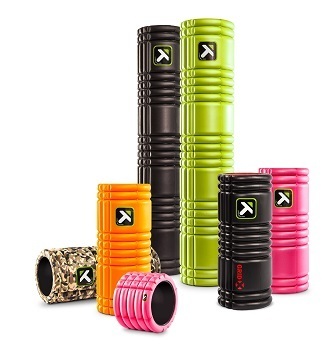
- GRID 1.0 (standard) – best for most people
- GRID X (extra firm) – only if you want very deep pressure
- GRID 2.0 (longer) – better for larger bodies or more stability
Is the GRID Foam Roller Worth the Price?
The GRID is more expensive than basic foam rollers, but the difference comes down to durability and pressure.
Cheap rollers often flatten or lose firmness after a few weeks.
The GRID keeps its shape for years and supports up to 500 pounds.
If you plan to use a foam roller regularly, it’s usually worth paying more once instead of replacing a cheaper one many times.
Is It Safe to Use a Foam Roller on Your Back?
Foam rolling can be helpful for your muscles, but you should be careful with your lower back.
There is less natural protection in that area, and too much pressure can cause the muscles to tighten instead of relax.
It’s usually safer to:
- Focus on the upper back, glutes, and legs
- Avoid rolling directly on the lumbar spine
If your main issue is lower back pain, a back roller wheel or traction device may be a better option.

How to Use the GRID Foam Roller (Without Making It Worse)
The biggest mistake people make is going too hard too fast.
Here’s a simple way to start with the GRID:
- Start with light pressure (don’t put your full weight on it)
- Roll slowly over the muscle (not the joint)
- When you find a tight spot, pause for 10–20 seconds
- Breathe and let the muscle relax
- A few minutes per muscle group is usually enough.
You don’t need to “push through pain” to get results.
Here’s how to do it the right way for lower back pain:
When the GRID Is NOT the Right Choice
- If you want something softer – choose a basic foam roller
- If you want deeper therapy – consider a massage gun
- If your main issue is the lower back – consider a back roller wheel
- If you don’t like pain – this may not be for you
Grid Foam Roller FAQ
Here’s an answer to the most frequently asked questions about the Grid deep tissue foam roller:
Is the Grid water-resistant?
Yes, it’s resistant to sweat, and you can rinse it without any problem.
Can it be used in bed?
No, because it will just be a lump in the bed. It will work on any household surface, including a carpet.

What’s a Softer Trigger Point Foam Roller Alternative?
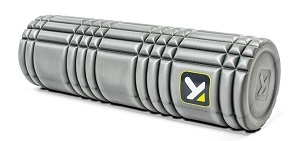
What if you’d like your trigger point foam roller to be firm but not too firm?
If you are new to foam rolling or concerned about the Grid’s firmness level, the CORE Trigger Point foam roller is a softer, milder version. It would be a great starting point for foam rolling.
Compare all Grid Foam Roller models HERE
We hope you’ve found this guide helpful and time-saving. If you’d like to share your experience with the Grid or ask any questions, let us know in the comments below.
Conclusion
The TriggerPoint GRID foam roller is not for everyone – but for the right person, it’s one of the best tools you can have at home.
If you want deeper muscle relief and a roller that lasts for years, it’s a great choice.
If you prefer something softer and more comfortable, you may want to start with a simpler foam roller instead.
👉 Bottom line: great for tight muscles, not great for sensitive ones.
To your health and happiness,
The Back Pain Relief Products Team
Studies
Wilke J, Vogt L, Banzer W. Immediate effects of self-myofascial release on latent trigger point sensitivity: a randomized, placebo-controlled trial. Biol Sport. 2018;35(4):349-354. doi:10.5114/biolsport.2018.78055